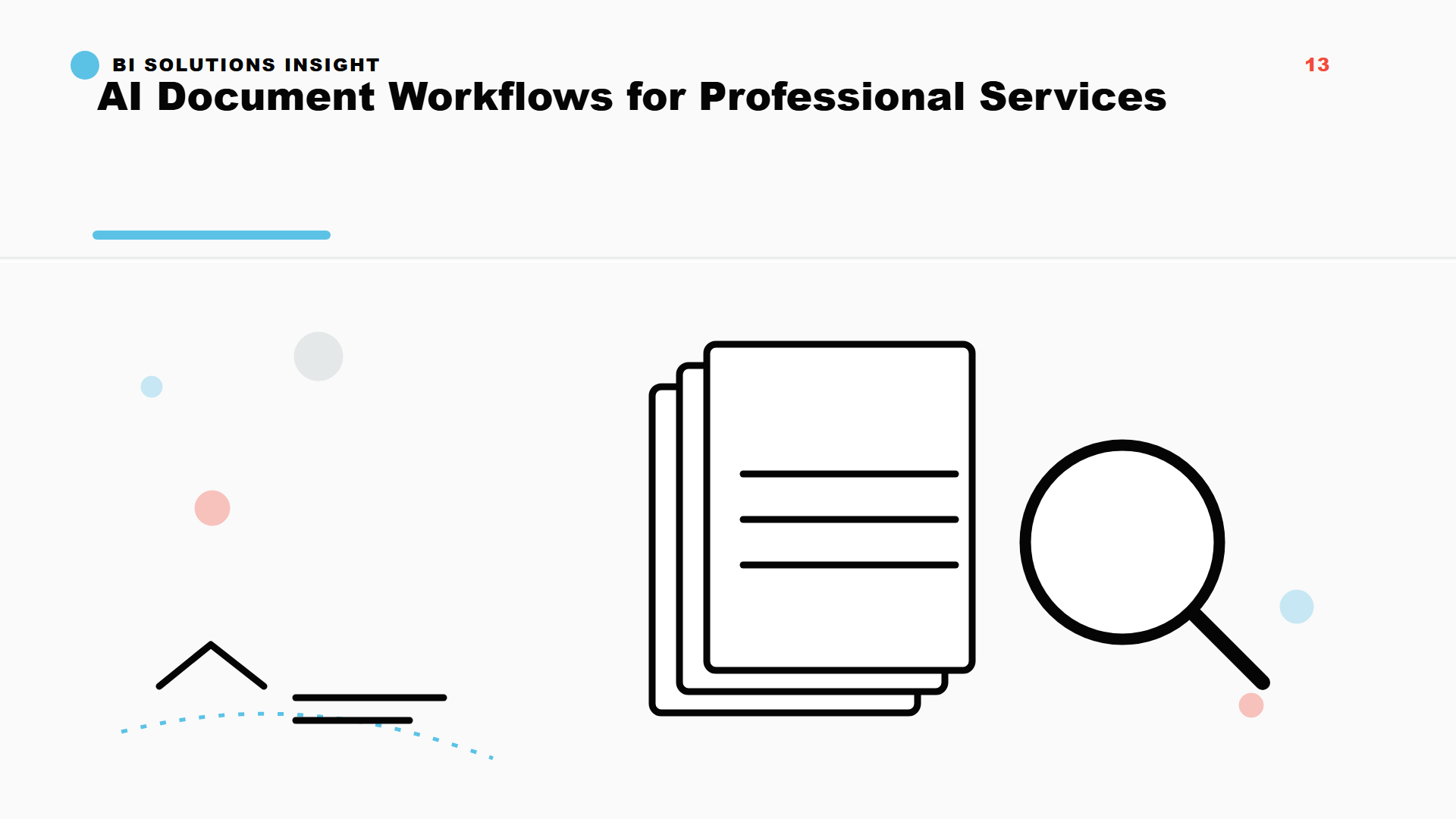
Professional-service work often includes document-heavy tasks: reading, summarizing, comparing, extracting, drafting, and reviewing. AI can help, but only if the workflow is designed carefully.
AI should support expert review
The strongest use cases keep experts in control. AI can prepare a first summary, identify themes, extract fields, or draft a response. The professional still reviews judgment, accuracy, and risk.
The AI automation and workflow service helps frame these processes so they are useful without becoming uncontrolled automation.
Privacy comes first
Document workflows often include sensitive information. That means data handling, access, and review rules must be defined before scaling the process.
Choose narrow document tasks first
The safest first workflows are bounded: summarize a meeting note, extract fields from a standard document, classify incoming requests, compare two versions, or prepare a first draft from approved source material.
These workflows are easier to test because the team can define what good output looks like. They also make review practical. A professional can inspect a summary or extracted field faster than writing everything from scratch.
Build a review trail
Document AI should make it clear which source was used, what the AI produced, who reviewed it, and what changed before final use. That review trail protects quality and gives the team material for improving prompts and instructions.
For professional services, this is often the difference between useful assistance and uncontrolled automation. The workflow should be designed around responsibility, not novelty.
FAQ
What document tasks are good first AI use cases? Summaries, classification, field extraction, comparison, drafting from approved sources, and internal knowledge retrieval are practical starting points.
Can AI review legal, financial, or professional documents without human review? It should not be used that way for serious work. AI can assist, but expert review remains essential.
What should an AI document workflow define? It should define source access, prompt instructions, output format, privacy rules, review ownership, and escalation paths.