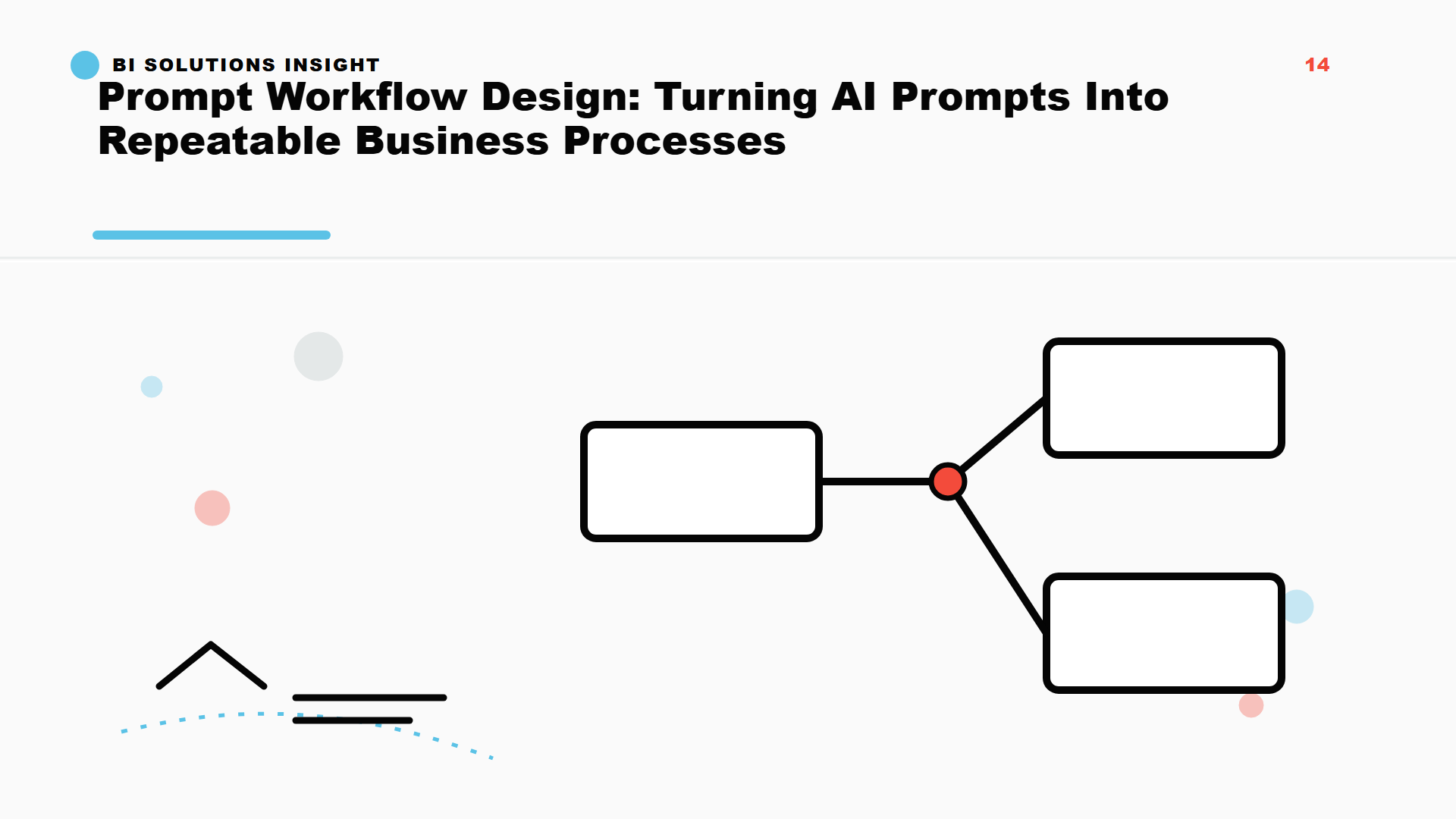
A useful prompt is a start, not a process. Business teams need repeatable AI workflows that define the input, expected output, review standard, and next action.
From prompt to workflow
A workflow prompt should explain the role, context, source material, output format, constraints, and review checklist. It should also state what the AI must not do.
This connects AI automation consulting with AI governance and literacy. Teams need both the workflow and the habits to use it responsibly.
Reuse creates consistency
When prompts become shared workflows, output quality becomes easier to improve. Teams can version the workflow, compare results, and teach new users faster.
Standardize the inputs
Prompt quality often fails because teams give inconsistent context. A repeatable workflow should define the required input fields, source documents, audience, output format, tone, constraints, and examples of acceptable output.
This turns a prompt from a personal trick into an operating asset. The team can improve it, document it, and train new users without starting from zero.
Add review criteria
AI output should be checked against criteria that match the business risk. A marketing draft may need brand and accuracy review. A customer support summary may need source validation. A compliance-related workflow may need escalation rules.
When the review criteria are explicit, AI use becomes easier to govern. The team knows what the assistant can help with and what still requires human judgment.
FAQ
What is prompt workflow design? It is the process of turning a prompt into a repeatable workflow with inputs, constraints, output format, review criteria, and ownership.
Why do business prompts fail? They fail when context is inconsistent, output standards are unclear, or no one defines how the result will be reviewed and used.
How does prompt workflow design support AI adoption? It gives teams reusable patterns, improves quality, and reduces risky one-off AI use.