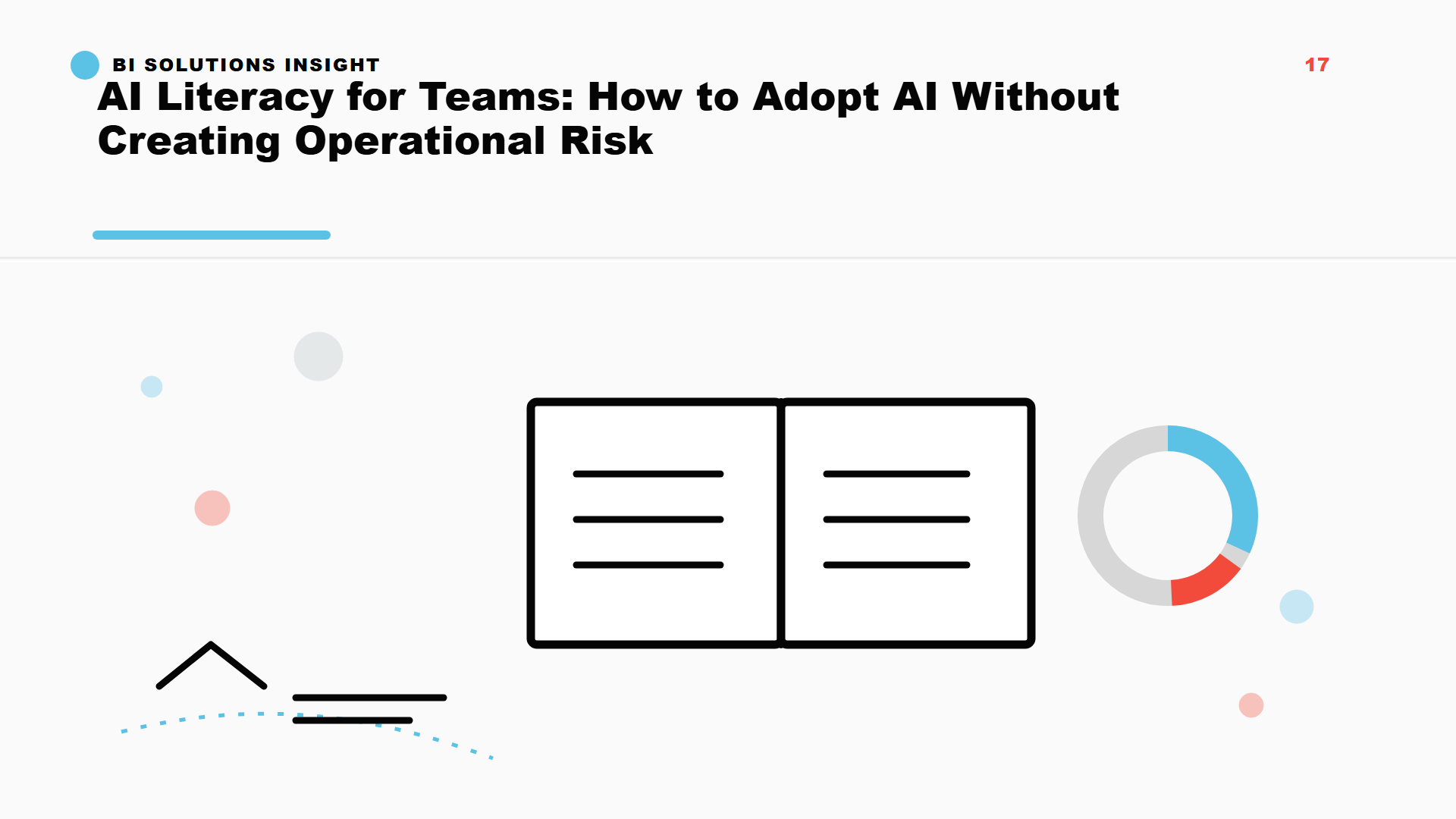
AI tools are already entering daily work. Employees use them to draft text, summarize information, analyze documents, write code, explore data, and prepare communication. The question is no longer whether teams will use AI. The question is whether they will use it safely and productively.
AI literacy is the bridge between access and responsible adoption. It gives teams a shared understanding of what AI can do, where it fails, and how human review should work.
Why tool access is not enough
Giving people an AI tool without guidance creates uneven habits. Some users will overtrust output. Others will avoid the tool entirely. Some may paste sensitive information into the wrong place. Others may use AI only for low-value tasks.
Training helps teams move from random experimentation to useful operating patterns.
What AI literacy should cover
A practical AI literacy program should explain prompting, verification, privacy, hallucination risk, review workflows, and appropriate use cases. It should also connect those lessons to the company's real tasks.
The AI governance, literacy, and adoption service includes this kind of support.
Change management matters
AI adoption is not only a training issue. It changes how work is reviewed, delegated, documented, and measured. Teams need clarity on which tasks can be AI-assisted and which require stricter control.
Managers also need a practical language for discussing quality. The output may be fast, but is it correct? Does it use sensitive data? Does it need expert approval? Is it consistent with company policy?
Build habits before scaling tools
The safest path is to build habits first. Start with controlled use cases, teach review standards, document what is allowed, and create escalation paths for uncertain situations.
AI literacy turns AI from an informal shortcut into a professional capability. That is what makes adoption more useful and less risky.