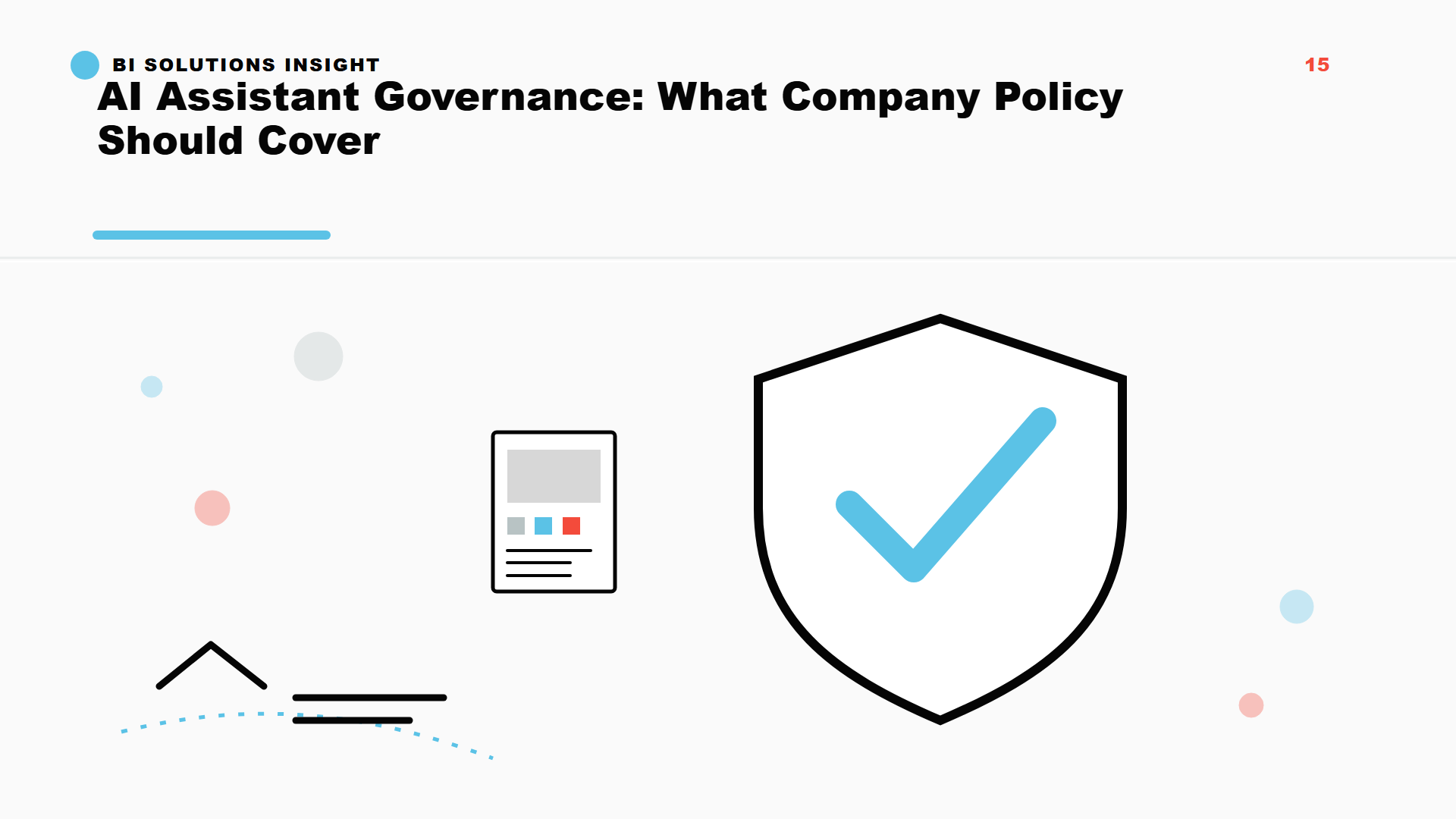
AI assistant use is already happening in many companies, with or without formal policy. Governance helps turn informal use into safer operating behavior.
What policy should include
Define allowed use cases, restricted data, review requirements, tool choices, logging expectations, and escalation rules. The policy should be short enough to use and specific enough to guide real work.
The AI literacy and change management service helps teams translate responsible AI principles into practical workplace habits.
Training makes policy real
A policy that no one understands will not change behavior. Teams need examples, workshops, and review habits that connect the policy to their daily tasks.
Policy should separate low-risk and high-risk use
Not every AI use case needs the same controls. Brainstorming internal ideas is different from processing customer data, summarizing contracts, generating financial advice, or sending automated responses.
A practical policy should classify use cases by risk and give teams clear examples. That makes compliance easier because employees can understand the difference between acceptable assistance and restricted automation.
Governance should include approved tools
Teams need to know which assistants are approved, which data can be entered, whether outputs may be stored, and who reviews new AI workflows. Without this, employees invent their own rules.
BI Solutions treats AI governance as part of adoption. The aim is not to block useful tools. The aim is to give teams enough structure to use them responsibly.
FAQ
What should an AI assistant policy include? It should cover approved tools, allowed use cases, restricted data, review rules, logging expectations, and escalation paths.
Should companies ban AI assistants? A blanket ban is often unrealistic. Clear rules, approved tools, and training usually create safer behavior than silence.
Who should own AI assistant governance? Ownership should involve business leadership, operations, IT, privacy or legal stakeholders, and the teams using AI in daily work.